


As we age, our dental needs change.
Teeth that have decades of restorations, previous dental work, gum recession, dry mouth, or missing teeth require a different level of attention. Many seniors worry:
- “Will I lose more teeth?”
- “Are my bridges or crowns going to fail?”
- “Is it too late to fix long-term problems?”
- “How do I manage dry mouth and recurring decay?”
At Witkowski Dental in Mokena, IL, we provide complete geriatric dental care designed to preserve function, prevent further tooth loss, and maintain confidence for years to come.
What Is Geriatric Dental Care?
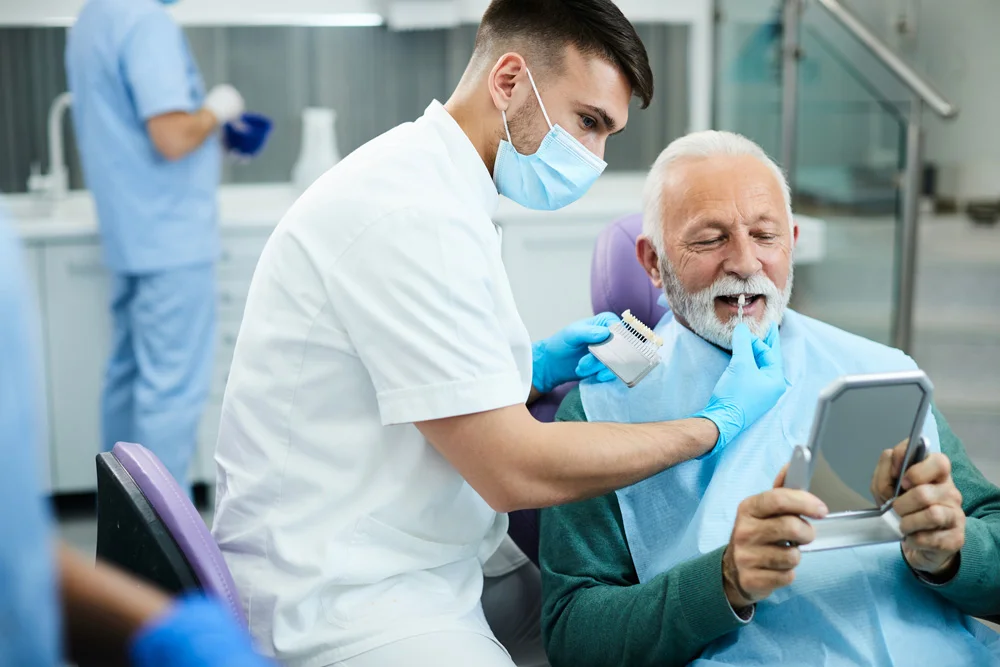
Geriatric dentistry focuses on the unique oral health needs of older adults.
This often includes:
- Managing complex restorations (bridges, crowns, partial dentures)
- Monitoring gum disease progression
- Addressing dry mouth (xerostomia)
- Preventing recurrent decay around existing dental work
- Restoring function for comfortable chewing
- Supporting overall health through oral stability
The goal is not just treatment — it’s long-term disease management and preservation.
Why Dental Care Becomes More Complex With Age
Many seniors in Mokena and surrounding communities like Frankfort, New Lenox, and Orland Park have:
- Large, older fillings
- Long-span dental bridges
- Multiple crowns
- Receding gums
- Bone loss
- Reduced salivary flow
These factors significantly increase the risk of:
- Root decay
- Bridge failure
- Gum disease progression
- Tooth fracture
- Tooth loss
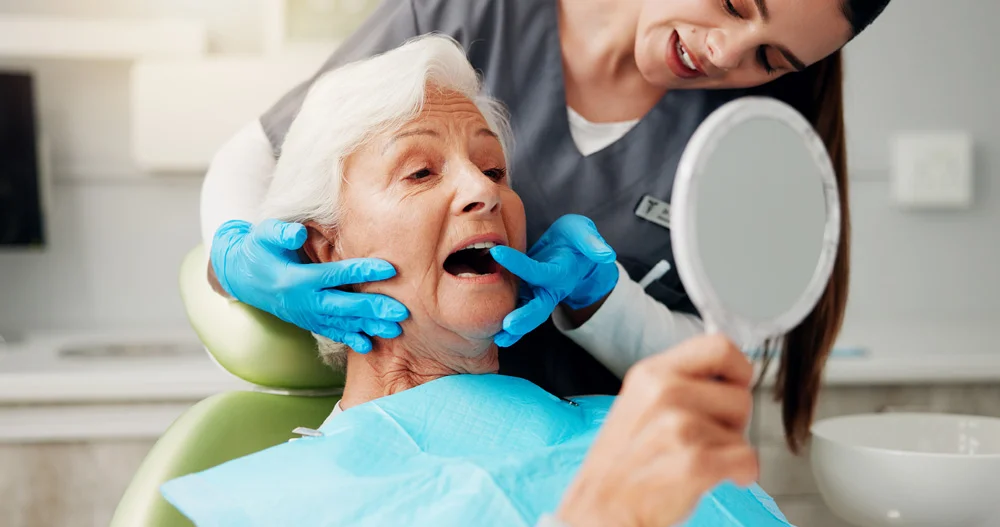
Dry mouth alone can dramatically increase cavity risk because saliva helps neutralize acids and protect enamel.
This is why routine cleanings are no longer “just cleanings.”
They are preventive stabilization appointments.
Preventive Dental Care for Seniors in Mokena
Preventive care is the foundation of geriatric dentistry.
At Witkowski Dental, this includes:
- Complete oral exams
- Periodontal evaluations
- Digital radiographs when necessary
- Professional plaque and calculus removal
- Fluoride therapy
- High-fluoride prescription toothpaste when indicated
- Monitoring of existing crowns and bridges
If you have complex restorative work, your supporting teeth carry additional stress. Even small areas of decay around bridge abutments can compromise an entire restoration.
Consistent six-month recare visits dramatically reduce long-term complications.

Managing Gum Disease in Older Adults
Mild to moderate periodontal disease is common in patients over 60.
Gum disease can:
- Cause bone loss
- Lead to tooth mobility
- Increase inflammation in the body
- Complicate existing dental restorations
Early detection and periodontal maintenance are critical.
Stability is possible — but only with regular monitoring and professional intervention.
Restorative Options for Seniors
If restorations are failing or missing teeth are impacting function, we may recommend:
- Crown replacement
- Bridge replacement
- Partial dentures
- Implant-supported solutions (when appropriate)
- Conservative restorative treatment to preserve structure
Our focus is always:
- Stabilize disease
- Preserve remaining natural tooth structure
- Restore function
- Improve confidence
Case Study: Long-Term Geriatric Dental Care in Mokena, IL
One of our 71-year-old patients came to us concerned about difficulty chewing and fear of losing more teeth. She had multiple long-span bridges and a history of recurring decay.
Clinical findings revealed:
- Large restorations on bridge abutment teeth
- Mild generalized periodontitis
- Reduced salivary flow
- Areas of bone loss
- High risk for recurrent decay
We began with disease control:
- Removed active decay
- Replaced failing restorations
- Reinforced oral hygiene techniques
- Prescribed high-fluoride toothpaste
- Enrolled her in a strict six-month recare program
Once stabilized, compromised bridgework was replaced with restorations designed for improved integrity and long-term function.
Years later, she continues to attend routine hygiene visits, and her oral health remains stable — with no further tooth loss.
Extensive dental history does not mean a hopeless dental future.
A Patient Perspective
“Jennifer is the best. I’m terrified of the dentist but she makes me feel so calm. She’s gentle which puts me at ease. I like how she explains the procedure and lets me know what she’s doing at each step. I’m so grateful that she’s my hygienist.”
– Joyce Jones
Gentle, transparent care matters — especially for patients with dental anxiety.
Frequently Asked Questions About Geriatric Dentistry
The Importance of Long-Term Maintenance
You may have spent years addressing dental problems as they occurred.
Now is the time to shift toward prevention.
At Witkowski Dental in Mokena, IL, we help seniors:
- Stabilize existing dental work
- Reduce risk of future tooth loss
- Improve chewing comfort
- Maintain confidence
- Protect overall health
The earlier we intervene, the more we can preserve.