


Missing a tooth can change more than your smile.
It can affect how you chew, how you speak, and how confident you feel in social situations. Many patients also worry:
- “Will my other teeth start shifting?”
- “Is implant surgery painful?”
- “What if something goes wrong?”
- “Is a dental implant really worth it?”
At Witkowski Dental in Mokena, IL, we provide predictable, comfortable dental implant treatment designed to restore function, stability, and confidence — without unnecessary stress.
What Is a Dental Implant?
A dental implant is a small titanium post placed into the jawbone to replace the root of a missing tooth.
Once healed, the implant supports:
- A porcelain crown (single missing tooth)
- A bridge (multiple teeth)
- A denture (full arch support)
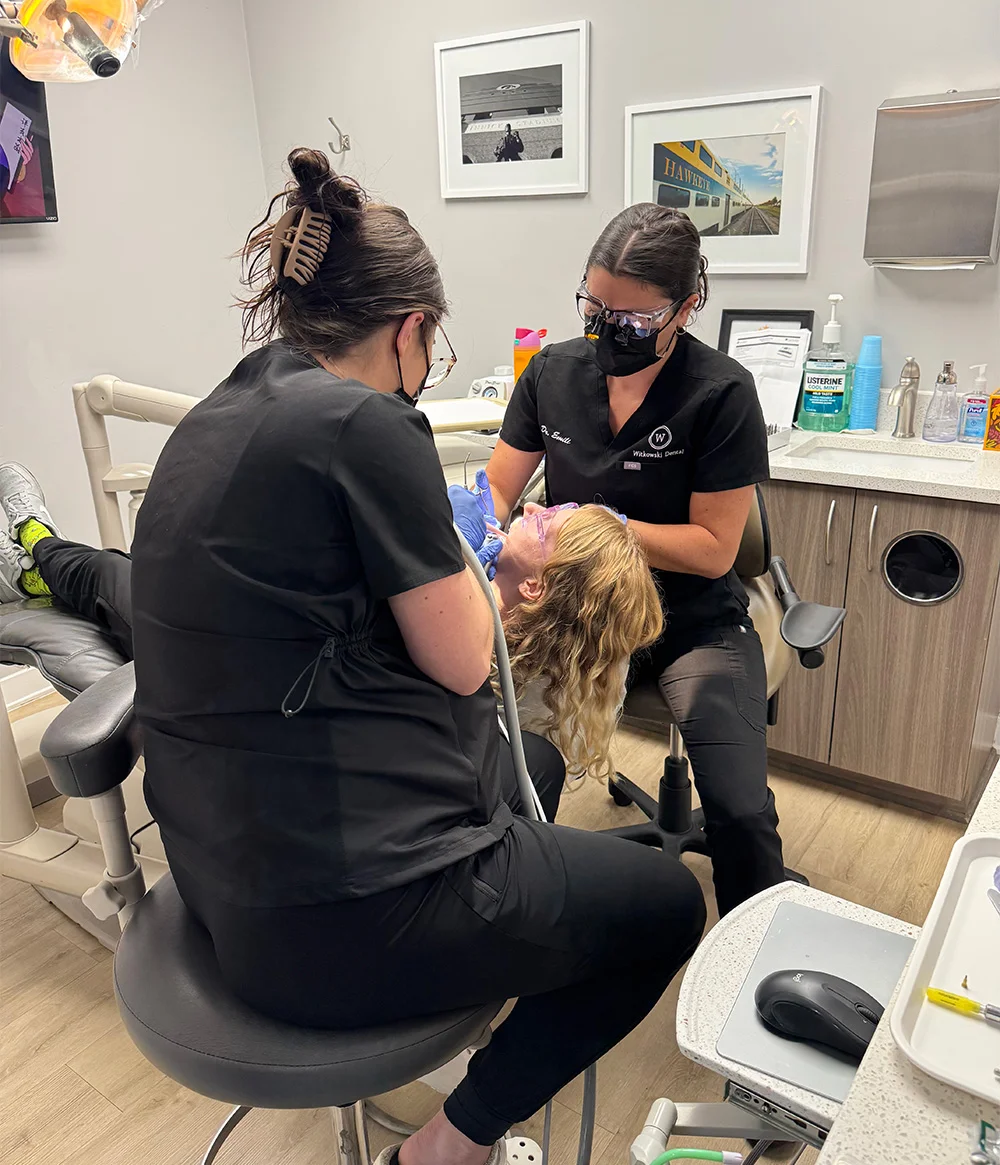
Dental implants are the most stable and long-term solution for missing teeth.
Unlike removable options, implants integrate with your bone through a process called osseointegration, creating a secure foundation for chewing and speaking.
Why Replace a Missing Tooth?
Even one missing molar can lead to:
- Shifting of adjacent teeth
- Bite instability
- Increased wear on remaining teeth
- Bone loss in the jaw
- Difficulty chewing certain foods
Over time, these changes can cause additional dental problems.
Replacing a missing tooth early helps preserve long-term oral health.

Are Dental Implants Painful?
This is the most common question we hear.
Most patients are surprised by how comfortable the procedure is.
Implants are placed under local anesthesia, and post-operative discomfort is typically minimal. Many patients report less discomfort than they experienced with the original tooth extraction.
Gentle surgical technique, clear communication, and thorough follow-up make a significant difference in the overall experience.
Who Is a Candidate for Dental Implants?
You may be a candidate if you:
- Are missing one or more teeth
- Have healthy gums
- Have adequate bone support (or qualify for grafting)
- Are in good general health
We use advanced imaging, including cone beam CT scans, to evaluate bone volume and determine candidacy.
If implants are not ideal for you, we will discuss alternative solutions openly.
The Dental Implant Process at Witkowski Dental
1. Complete Evaluation
We assess:
- Bone volume and density
- Gum health
- Bite alignment
- Medical history
All treatment options, risks, and benefits are reviewed thoroughly so you can make an informed decision.
2. Implant Placement
The titanium implant is placed into the jawbone under local anesthesia following precise surgical protocol.
Primary stability is achieved, and a healing component is placed to support tissue healing.
3. Healing & Osseointegration
Over several months, the implant integrates with the bone. Follow-up visits ensure proper healing and stability.
4. Final Restoration
A custom abutment and porcelain crown are placed, carefully adjusted for proper bite and natural appearance.
The final result feels and functions like a natural tooth.
Dental Implant Case Study: 46-Year-Old Female in Mokena, IL
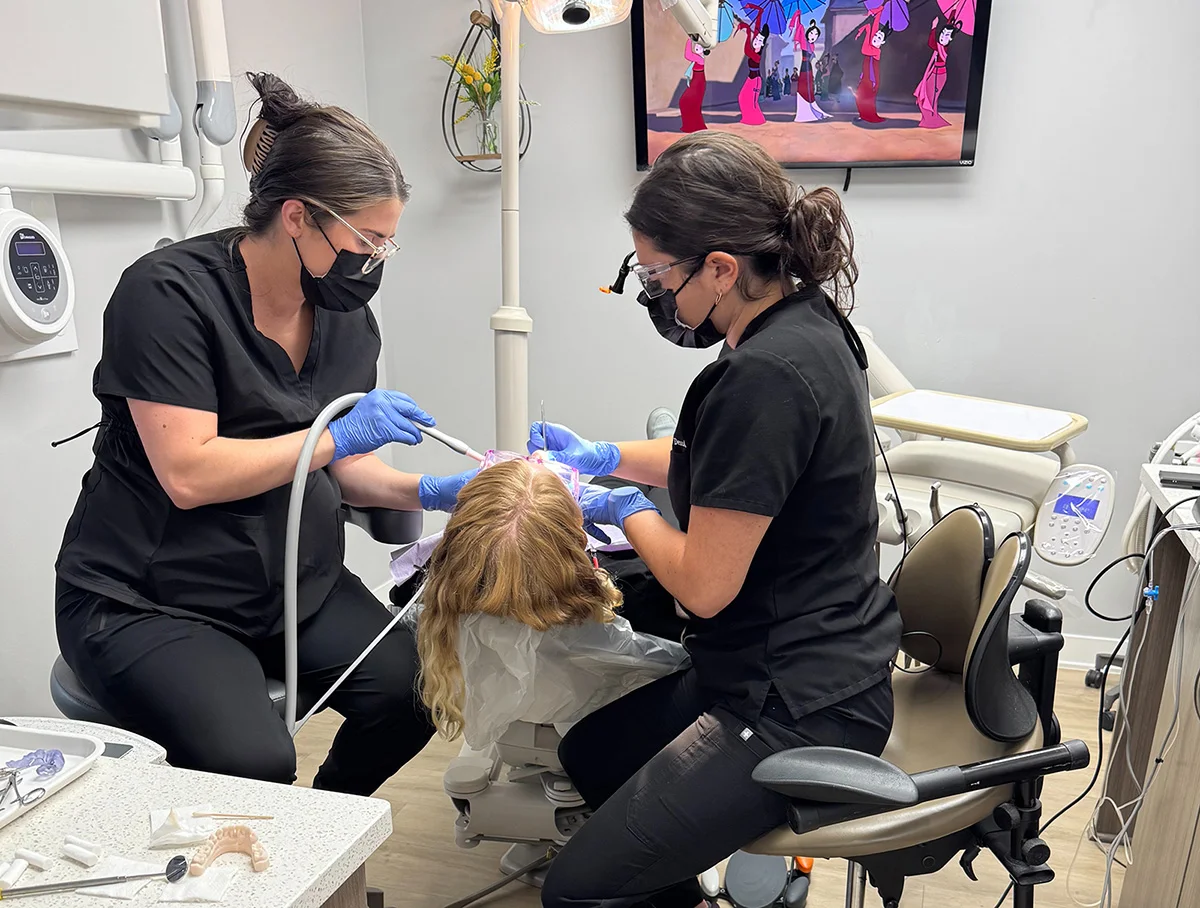
One of our patients, a 46-year-old female, presented with a missing molar that had been extracted several years earlier due to fracture and decay.
She had delayed treatment because of anxiety about oral surgery and post-operative pain.
Clinical Findings
- Healed edentulous ridge
- Healthy surrounding gingival tissues
- Adequate bone volume confirmed by cone beam CT
- No pathology present
She wanted a fixed, long-term solution that would restore chewing ability and prevent shifting of adjacent teeth.
Treatment Plan
We recommended:
- Placement of a single endosseous dental implant
- Restoration with a custom abutment and porcelain crown
All risks, benefits, and alternatives were reviewed. Special attention was given to addressing her surgical anxiety and explaining the entire process in detail.
Surgical Experience
The implant was placed under local anesthesia with excellent primary stability.
A healing abutment was placed, and tissue was sutured for optimal healing.
The patient tolerated the procedure extremely well.
Post-Operative Outcome
Despite significant pre-operative anxiety, she reported:
- Minimal to no discomfort
- No abnormal swelling
- Little to no need for pain medication
- No complications
Healing was uneventful, and radiographs confirmed successful osseointegration.
After the healing period, the implant was restored with a porcelain crown carefully adjusted for ideal function.
Final Result
The patient regained full chewing ability and complete comfort.
Her biggest fear — post-operative pain and complications — proved unfounded.
With proper planning and technique, dental implant treatment is highly predictable and comfortable.
Patient Testimonial
“I was extremely anxious about getting a dental implant, but from start to finish Dr. Witkowski and his team made the entire process so comfortable and reassuring. The surgery and the restoration both went incredibly smoothly. I had no pain, no discomfort, and absolutely no complications. I am so happy with the final result and beyond grateful that I decided to move forward with the implant restoration. Dr. Witkowski truly exceeded my expectations, and I couldn’t be more pleased with my experience and my new smile!”
– Gracie Chlebek
Benefits of Dental Implants
- Preserve jawbone structure
- Prevent adjacent teeth from shifting
- Restore full chewing function
- Do not rely on neighboring teeth for support
- Long-lasting and highly durable
- Natural look and feel
Dental implants are designed to protect both your smile and your long-term oral health.