


Here’s a fact most patients don’t think about until December: most dental insurance plans reset on January 1, and any unused benefits from the current year disappear forever.
That includes your annual maximum, your unused preventive visits, and in many cases, your remaining deductible payment that you’ve already made progress toward. None of it carries over.
We see this every December at Witkowski Dental. Patients suddenly realize they have hundreds, sometimes thousands, of dollars in benefits they paid premiums for all year and are about to lose. The schedule fills up fast, the appointments that are still available get harder to book, and some patients miss the deadline entirely.
Mid-year is the smart time to check in. Here’s why, what to look at, and what you can do now to make sure you’re getting the value you’re already paying for.
How Dental Insurance Benefits Actually Work
Before we talk about how to use them, it helps to understand how dental insurance is structured, because it works differently than medical insurance in some important ways.

The Annual Maximum
This is the single most misunderstood part of dental insurance. Your annual maximum is the cap on what your plan will pay out in a calendar year. Common amounts are $1,000, $1,500, or $2,000, depending on your plan.
Once your insurer hits that cap, they stop paying for the rest of the year, and any work you need beyond that is fully out of pocket.
The flip side: if you don’t use the maximum, the unused portion doesn’t roll over. It just expires on December 31. The insurance company keeps the money you paid in premiums, and you start fresh with a new $1,500 cap on January 1.
This is why mid-year planning matters. If you’ve used $400 of a $1,500 maximum so far this year, you have $1,100 in benefits available between now and December 31. That money is yours, in a sense, but only if you actually use it.
Preventive Visits
Most dental plans cover two preventive visits per year (cleanings, exams, X-rays) at 100% with no out-of-pocket cost. These also reset on January 1, and unused preventive visits don’t carry forward.
If you’ve only had one cleaning this year, your plan likely covers a second one between now and December at no cost to you. There’s no reason to skip it.
The Deductible
Your deductible is what you pay out of pocket before insurance starts contributing. Once you’ve met your deductible for the year, it resets to zero on January 1, meaning you have to start paying out of pocket again from scratch.
If you’ve already met your deductible this year, any treatment you do before December 31 will be more cost-effective than the same treatment in January, because you won’t have to hit the deductible again.
Why People Lose Benefits Without Realizing It
A few patterns we see every year explain why so much insurance value goes unused.
“I’ll Get to It Eventually”
Patients scheduled the cleaning they meant to get done in March. Then April happens. Then summer. Then it’s October, and they realize they haven’t been to the dentist all year. By the time they call, the schedule for the rest of the year is filling up, and getting in before the deadline becomes a scramble.
Recommended Treatment That Got Postponed
This is the most common one. A patient comes in for a cleaning, the dentist points out a small cavity or a worn filling that should be addressed, and the patient says, “Let’s wait on that.” Months pass. The patient forgets it was ever recommended. The benefits that would have covered most of the cost have expired.
If your dentist has recommended treatment this year, take a look at your records or call the office. There’s a good chance you have insurance benefits still available to cover most of the cost.
Putting Off the “Optional” Stuff
Things like night guards (for grinding), whitening, or replacement of old fillings often get categorized as “I’ll get to it next year.” But many of these are partially covered by insurance, especially when there’s a clinical justification (grinding causing tooth wear, old amalgam fillings beginning to fail). Putting them off means paying full price next year.
What to Check Right Now
If you haven’t looked at your dental insurance status this year, here’s what to find out. This takes about ten minutes total.
Your Annual Maximum and How Much You’ve Used
Call your insurance company or log into your member portal. Find out:
- What is your annual maximum?
- How much have you used so far this year?
- How much remains available between now and December 31?

Whether You’ve Met Your Deductible
Same source. If you’ve met it, any work you do before year-end will be more cost-effective than waiting.
Whether You’ve Used Both Preventive Visits
If you’ve only had one cleaning this year, you almost certainly have a second one available at no cost to you.
Any Recommended Treatment from Earlier This Year
Check your dental records or call the office. If your dentist recommended something earlier in the year that you didn’t follow up on, this is the time.

What You Can Do Now
If you find unused benefits, the action steps are simple.
Schedule Your Next Cleaning
If you haven’t had your second preventive visit this year, book it now. Even better, book it for a time that works for your schedule, since the calendar fills up fast in November and December.
Don’t wait until December to discover that the appointment slots are gone or that the only available times don’t work for you.
Address Recommended Treatment
If you have outstanding recommendations from a previous visit, call the office to discuss them. We can usually:
Estimate what your insurance will cover.
Sequence the treatment to get the most out of your remaining benefits.
Schedule it at a time that fits your work or family calendar.
In some cases, splitting treatment across the calendar year (some now, some after January 1) actually maximizes coverage by using two annual maximums rather than one. We can help you plan that.
Ask About Anything You’ve Been Putting Off
Whitening consultation, night guard for grinding, replacement of an old crown that’s bothering you, evaluation of a tooth that’s been sensitive: anything you’ve meant to address is worth asking about while your benefits are active.
How Witkowski Dental Helps with Insurance Planning
We’re not insurance brokers, but we work with dental insurance every day, and we know how to help patients maximize what they’re already paying for.
A few specific things we do:
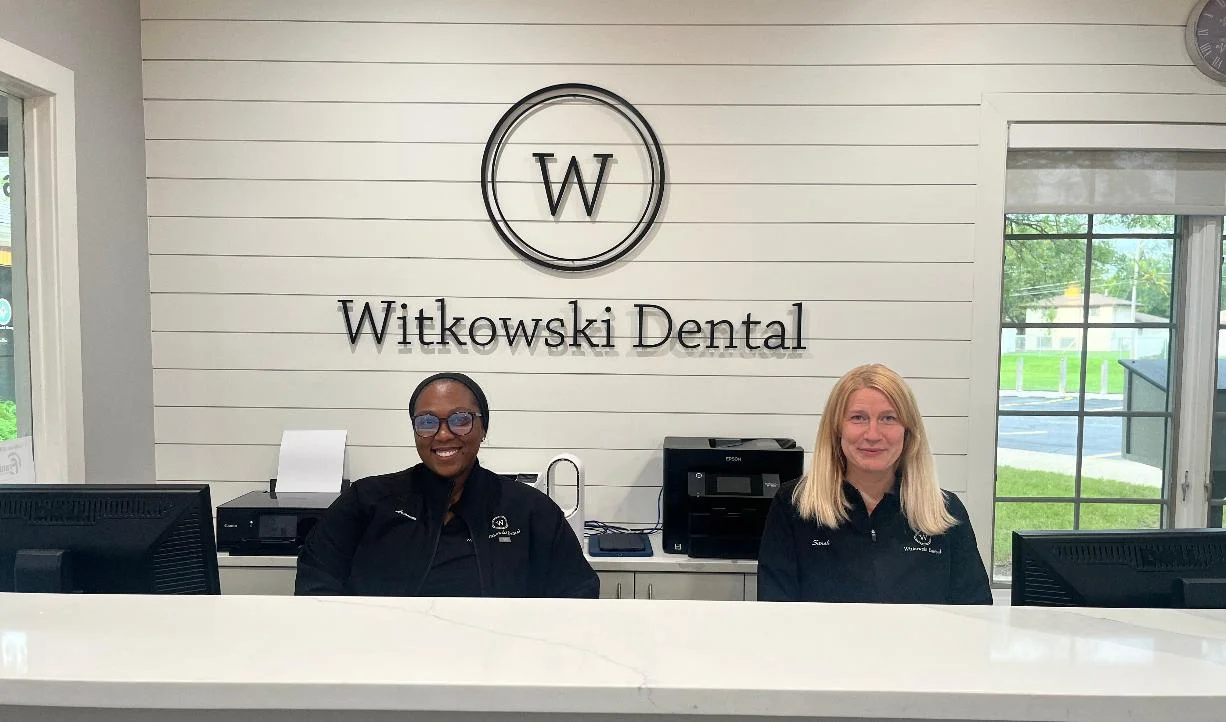
Verify your benefits before treatment. Our front desk team, including Bonnie at the front desk, can call your insurance and confirm what’s covered before you commit to anything.
File claims on your behalf. You don’t have to navigate the insurance paperwork. We submit the claims and follow up if needed.
Plan treatment around benefit cycles. If you have major work to consider, we can sometimes structure the timing to make the most of your annual maximum. This isn’t always possible, but when it is, it can save you significant out-of-pocket cost.
Explain coverage clearly. No surprises about what’s covered and what isn’t. If something won’t be covered, we tell you upfront so you can plan accordingly.
If you’ve never had your benefits explained clearly by a dental office before, that’s worth fixing. Most patients have more coverage than they realize.
Please give the office a call with any questions you may have. Gracie, Sarah and Aramis are more then happy to look into benefits, send out pre-estimates and schedule appointments with Dr. Witkowski, Dr. Clevenger and Dr. Emili.
What If You Don’t Have Dental Insurance?
A quick note for patients without insurance, since the year-end question still matters in a different way.
If you’ve been postponing treatment because you don’t have coverage, we offer financing options through CareCredit and Cherry that can spread the cost of treatment over manageable monthly payments. Many patients find that financing makes treatment that felt out of reach actually doable.
We also offer individual treatment plans built around your specific financial situation, not just a standard fee schedule. We’d rather work with you on a plan that fits your budget than have you postpone needed care indefinitely.
A Quick Mid-Year Action List
If you take just one thing from this article, let it be this: spend ten minutes checking your insurance status this week, then take one of the following actions before October.
- Schedule your second preventive cleaning if you haven’t had it.
- Follow up on any recommended treatment from earlier this year.
- Address anything you’ve been putting off (night guard, whitening, old fillings).
- Plan ahead for any major work you know is coming, so the timing works for your benefit.
The patients who get the most value out of their dental insurance are the ones who think about it in June and July, not the ones who scramble in December.
Frequently Asked Questions
Schedule Your Visit in Mokena
If you have unused benefits or postponed treatment to address, we’d love to help you make the most of what’s left of the year. We see patients from Mokena, Frankfort, Tinley Park, Orland Park, and the surrounding southwest Chicago suburbs, with appointment times designed for working families.
Our scheduling team can verify your benefits and help you plan treatment that fits both your health needs and your remaining coverage. Don’t wait until December to find out what’s available.
Call our Mokena office at 708-479-9888 or request an appointment through our contact form to schedule your visit.