


If you’re a parent wondering when your child should first see the dentist, you’re not alone. It’s one of the most common questions we get from new families at Witkowski Dental, and the honest answer surprises a lot of people.
Most parents assume the right age is somewhere around five or six, when most of the baby teeth have come in, and a child is old enough to sit through a full appointment without fuss. But the actual recommendation, supported by both the American Academy of Pediatric Dentistry and the American Dental Association, is much earlier than that.
We recommend bringing your child in for their first visit around their first birthday (age one), or when the first tooth appears, whichever comes first. That is earlier than many parents expect, and it lines up with guidance from the American Academy of Pediatric Dentistry and the American Dental Association.
Here’s why that timing matters, what the visit actually looks like, and how to make it a positive experience for everyone.
Why So Early?
When parents hear “by the first birthday,” the first reaction is usually surprise. There aren’t many teeth yet. The child can barely sit still for a haircut. What is a dentist actually going to do at that age?
The answer is that early visits aren’t really about treatment. There are about three things, all of which matter more than most parents realize.
Building Comfort Before It’s Needed
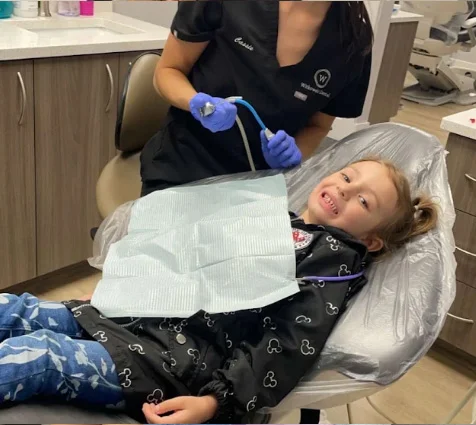
The single biggest reason for an early first visit is to introduce your child to the dentist before they ever need any real dental work. A child who has had a few easy, friendly visits where nothing scary happened tends to grow into an older child who isn’t afraid of the dentist.
Compare that to a child whose first visit is at age six because of a cavity. That child’s introduction to dentistry includes being told something is wrong, being numbed, and possibly having a procedure done. Even with the gentlest care, that’s a harder first impression.
The early visits we do in those first few years are often the foundation for a lifetime of comfortable, anxiety-free dental care. Children who get this introduction tend to grow into teenagers who keep their appointments and adults who don’t avoid the dentist.
Catching Small Problems Before They Become Big Ones
Even very young children can develop cavities, especially in the back molars, where brushing is harder, and snacks tend to settle. Catching a small cavity at age three or four is an easy fix. Catching it at age six after months of progression is more involved.
Early visits also let us monitor how teeth are coming in, whether there’s enough space, and whether the bite is developing correctly. Issues we catch early often correct themselves with simple guidance, while the same issues caught later might require more involved orthodontic intervention.
Teaching Parents the Habits That Matter Most
A surprising amount of what we do at a first visit is talk to parents. We cover brushing technique for little kids (which is different from adult brushing), what foods to limit, when to introduce flossing, and how to handle thumb-sucking or pacifier use as your child gets older.
This guidance has a much bigger impact at age two or three than at age six. The habits you build in those early years shape your child’s oral health for life.
What the First Visit Actually Looks Like
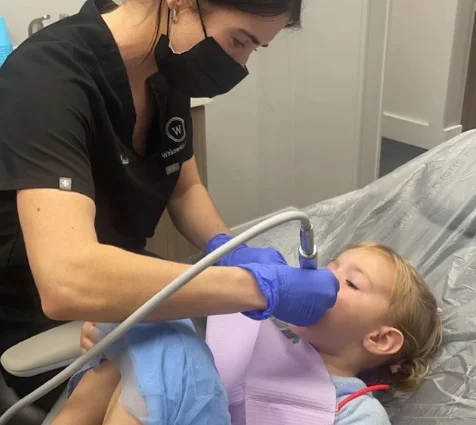
If you’re picturing your three-year-old in a giant dental chair while a stranger pokes around in their mouth, you can let that image go. A first visit looks nothing like an adult appointment, and at our office, we go out of our way to make it feel approachable rather than clinical.
Here’s what a typical first visit at Witkowski Dental includes:
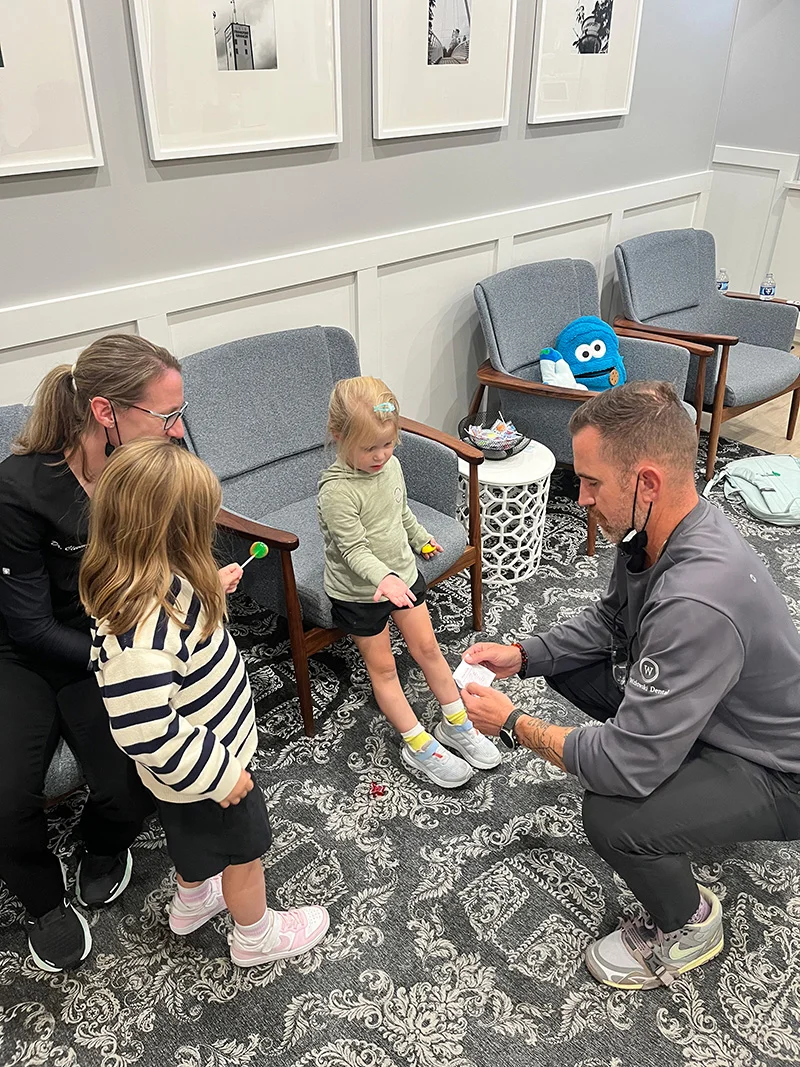
The visit starts with a tour. We give every new young patient a personal walk-through of the office before any care begins. Your child sees the chair that goes up and down, meets our team, and asks any questions they have. The mystery comes out of the experience right at the start.
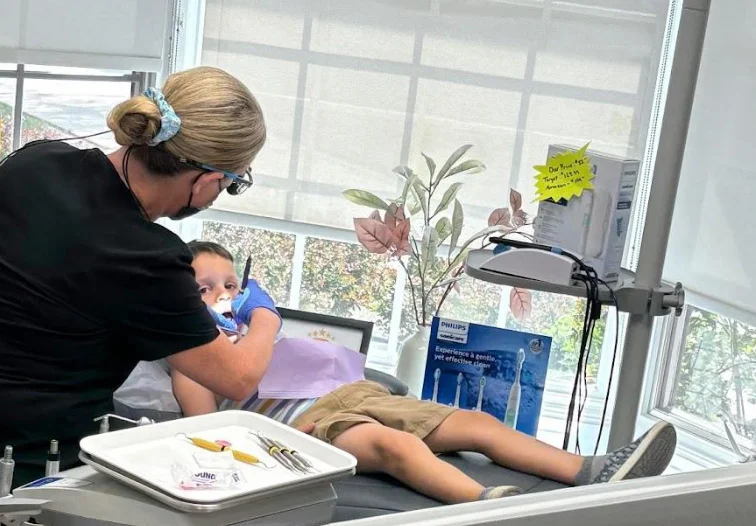
A gentle exam happens at your child’s pace. Sometimes that means your child sits in the chair on their own. Sometimes it means they sit on your lap and we do a quick look together. There’s no fixed protocol that has to be followed. We work with the child in front of us.
We count their teeth and check how they’re coming in. Most kids find this part fun, especially when we exclaim with pride at how many teeth they have.
If they’re comfortable, we’ll do a quick cleaning, just a polish with a flavored paste, plus a fluoride treatment if appropriate. If your child isn’t ready for this part on the first visit, that’s completely fine. We’ll plan for the next visit.
We talk to you (the parent) about brushing, diet, and any specific concerns you have.
The whole visit usually lasts 20 to 30 minutes. Your child leaves with positive memories, and often with excitement about coming back.
How to Prepare Your Child for Their First Visit
A few small things parents can do before the appointment make a big difference in how smoothly it goes.
Frame It Positively
How you talk about the visit beforehand matters more than almost anything else. Avoid words that introduce fear: don’t say things like “it won’t hurt,” because that plants the idea that pain is a possibility your child should be considering. Instead, frame it as something fun and grown-up. “We’re going to meet a friendly dentist who’s going to count your teeth and show us around their office.”
If you have your own dental anxiety (which is more common in parents than people admit), be especially careful not to project it. Kids pick up on tone instantly. If you sound nervous about the visit, they’ll be nervous too.
Read a Book About It
There are some great children’s books about visiting the dentist that walk through what to expect in a calm, friendly way. Reading one or two together in the days before the visit primes your child to recognize what’s happening once they’re there.
Pick the Right Time of Day
Morning appointments tend to work better than afternoon ones for young kids. Children are typically more rested, more cooperative, and less hungry mid-morning than they are after a long day.
Avoid scheduling the visit right after a big meal, too late in the day, or during nap time. The child’s mood at the appointment is half the battle.
Bring a Comfort Object
If your child has a favorite stuffed animal, blanket, or toy, bring it. Holding something familiar during the exam is reassuring, and our team will happily play along (your child’s stuffed elephant might also need their teeth counted).
What If My Child Is Older and Hasn’t Been Yet?
If your child is older and hasn’t been to the dentist yet, the message isn’t to panic, it’s just to schedule the visit now. The same principles apply: build a positive first impression, catch any developing issues early, and start teaching habits that will protect their teeth for life.
We see plenty of first-time patients in the four-to-eight age range. Some are nervous. Most are curious. All of them benefit from making the dentist a familiar, friendly part of their life.
What Makes Our Mokena Office Good for Kids
We’re a family practice in the truest sense, which means we treat children, parents, and grandparents under the same roof. A few specific things make our office a good fit for young patients.
We give personal office tours to new young patients, so the environment feels familiar before any care happens.
Our team is experienced with kids who are shy, wiggly, or anxious. Our hygienist, Stacey, is particularly good with younger patients, and our front desk team (especially Bonnie, a long-tenured member of our team) makes the whole office feel welcoming.
We see siblings and entire families together when it’s helpful. Many parents schedule back-to-back appointments so the whole family is done in one visit.
We use child-friendly language, never rush, and adjust each visit to the child in front of us. The goal is always for your child to leave wanting to come back.
Our doctors include Dr. Leon Witkowski III, Dr. Leslie Clevenger, and Dr. Emili Hester, who has a special interest in caring for children and is originally from Mokena.
We also make the visit genuinely fun, which is a big part of why kids look forward to coming back:
- A complimentary meet-and-greet and a walk-through of the office, so your child gets comfortable before any treatment.
- Kid-friendly tools with names like “Mr. Thirsty” and the “water sprayer,” in place of the usual syringe and suction.
- A balloon animal and a magic trick to finish the visit on a high note. Dr. LJ is the resident balloon artist.
- The “No Cavity Bell” to ring after a cavity-free exam, which kids love.
- A small prize to take home.
Frequently Asked Questions
Schedule Your Child’s First Visit
If your child is approaching their first birthday, or is older and hasn’t seen a dentist yet, now is a great time to schedule their first visit. We see families from Mokena, Frankfort, Tinley Park, Orland Park, and the surrounding southwest Chicago suburbs, with appointment times that work around school schedules.
We offer evening hours on Tuesday until 7 PM and Wednesday until 6 PM, plus Saturday hours from 8 AM to 2 PM, which makes scheduling around work and school much easier.
Your child’s first dental experience can shape how they feel about their teeth for the rest of their life. We’d love to make it a great one.
Call our Mokena office at 708-479-9888 or request an appointment through our contact form to book your child’s first visit.